Average Cleaner Salary in the UK — and Why Demand Keeps Growing
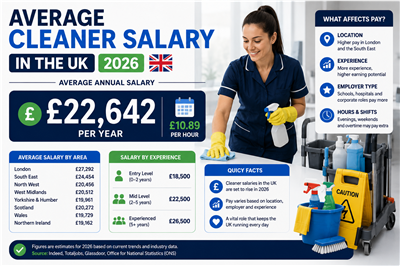
The average cleaner salary in the UK is around £21,800 per year, or roughly £11–£13 per hour for most roles. That figure covers a wide range — from part-time domestic work at the National Living Wage to specialist industrial cleaning that pays considerably more. The good news: demand for cleaners is rising, and wages across the sector have been growing faster than many people realise.
This guide breaks down what cleaners actually earn in 2026, how pay varies by role and region, and what's driving the continued need for cleaning staff across the UK.
What Does a Cleaner Earn in the UK?
Most cleaners in the UK are paid hourly. According to data from Indeed and Reed, the typical range runs from around £11 to £13 per hour for general cleaning roles, with annual salaries between £19,000 and £25,000 for full-time positions.
Entry-level cleaners — those with under a year's experience — typically start close to the National Living Wage, which rose to £12.71 per hour in April 2026 (up from £12.21 in April 2025). Because many cleaning roles were already at or near the wage floor, this increase has directly pushed pay up across the sector. According to the British Cleaning Council, annual wage growth in cleaning and sanitation reached 6.5% in 2024–25, one of the highest rates among lower-paid occupations.
Cleaner Pay by Role Type
Cleaning isn't one job — it covers a range of settings and specialisms, and pay varies significantly between them. The table below gives a realistic picture of what different cleaning roles pay in 2026.
| Role Type | Typical Hourly Rate | Typical Annual Salary (Full-Time) |
|---|---|---|
| Domestic / home cleaner | £12.00–£14.00 | £19,000–£22,000 |
| Office / commercial cleaner | £11.50–£13.50 | £20,000–£24,000 |
| School / educational facility cleaner | £12.00–£13.50 | £20,000–£23,000 |
| Hospital / clinical cleaner | £12.50–£14.50 | £22,000–£26,000 |
| Industrial / factory cleaner | £13.50–£15.50 | £24,000–£28,000 |
| Specialist / biohazard cleaner | £20.00–£35.00 | £30,000–£45,000+ |
Sources: Indeed UK, Reed, National Careers Service, PayScale (2025–2026 data)
Industrial and specialist roles attract the highest pay, partly because of the conditions involved — early starts, night shifts, and hazardous materials all command a premium. Hospital and clinical cleaning has also seen notable pay increases as NHS trusts and private health providers compete for staff.
Cleaner Salary by Region
Where you work makes a real difference to what you're paid. London rates are the highest in the country, driven by the capital's cost of living and the independently calculated London Living Wage, which stands at £13.85 per hour in 2026.
Outside London, salaries are lower but vary by local market and employer. The South East and cities like Bristol and Cambridge tend to track close to London. The Midlands, Yorkshire, the North West, and Scotland generally pay in line with — or just above — the National Living Wage for entry roles, with experienced cleaners earning a few pounds more per hour.
As a rough guide:
- London: £13–£15/hour for general cleaning; higher for specialist roles
- South East (e.g. Surrey, Kent, Brighton): £12–£14/hour
- Midlands (Birmingham, Coventry, Nottingham): £12–£13/hour
- North West (Manchester, Liverpool): £12–£13/hour
- Yorkshire (Leeds, Sheffield, Bradford): £11.50–£13/hour
- Scotland (Glasgow, Edinburgh): £12–£13.50/hour
- Wales and Northern Ireland: £11.50–£12.50/hour
Some employers — particularly NHS trusts and larger facilities management companies — use nationally agreed pay scales, which can mean slightly higher and more consistent pay regardless of location.
The National Living Wage and Cleaning Jobs
The National Living Wage (NLW) has a direct and outsized impact on cleaning sector pay because a large proportion of cleaning roles sit close to the wage floor. When the NLW increased to £12.71 in April 2026, many cleaners saw an immediate uplift — and pressure on employers to maintain differentials for experienced staff pushed up rates further up the pay scale too.
It's worth noting that the NLW applies to workers aged 21 and over. Workers aged 18–20 have a separate minimum of £10.00 per hour, while apprentices can be paid £7.55. If you're being offered less than the relevant rate for your age, that's a legal issue your employer must address.
Some employers — particularly those working on public sector contracts — voluntarily pay the Real Living Wage, which is calculated by the Living Wage Foundation based on actual living costs rather than political decisions. In London, this is £13.85/hour; outside London it is £12.60/hour as of 2025.
Why Demand for Cleaners Keeps Growing
There are more cleaning jobs in the UK now than at any point in recent years — and the trend is expected to continue. According to the British Cleaning Council's 2025 research report, the cleaning, hygiene and waste sector now employs over 1,000,000 people in the UK, with the cleaning and hygiene sub-category alone growing by 6.2% year on year.
Industry revenue across UK cleaning services is projected to reach £9.8 billion by 2025–26, with sustained compound growth of 5.6% per year over five years, according to IBISWorld analysis.
Several factors are driving this demand:
- Post-pandemic hygiene standards: Businesses, schools, and healthcare settings now maintain higher cleaning frequencies as standard practice, not just during outbreaks.
- Growth in commercial property and logistics: New offices, warehouses, and logistics hubs all need ongoing cleaning contracts.
- Ageing population: More older people living independently has increased demand for domestic cleaning services. Around 17% of private households in the UK now use a paid cleaner, according to the BCC.
- Staff shortages: Staffing has been chronically tight in the sector since Brexit reduced the available pool of overseas workers. The BCC has flagged that around 29% of new cleaning jobs are hard to fill. For job seekers, that means better negotiating power and faster hiring.
How to Earn More as a Cleaner
If you're already working in cleaning and want to increase your earnings, there are a few practical routes that genuinely make a difference.
Specialising is the most reliable way to move up the pay scale. Industrial cleaning, clinical and healthcare environments, and biohazard or trauma cleaning all pay substantially more than general commercial work — but require training, often including COSHH certification, NVQ qualifications, or specialist courses. Many employers will fund this training once you're in the door.
Supervision and management roles are another step up. A cleaning supervisor in a large commercial or healthcare setting can earn £26,000–£32,000 per year. Facilities managers with a cleaning background earn more still.
If you're self-employed or considering it, domestic cleaning rates in cities like London and Manchester can reach £18–£25 per hour when you're working directly for clients rather than through a contractor. The trade-off is that you handle your own bookings, insurance, and tax.
Night shifts and early morning starts also attract hourly premiums — often 10–25% more than daytime rates — and these shifts are common in commercial cleaning contracts covering offices, transport hubs, and public buildings.
What to Put on Your CV
Cleaning roles may look straightforward on paper, but employers — especially on larger contracts — pay attention to how you present yourself. A few things worth including on your CV: any COSHH awareness training, experience with specific equipment (floor scrubbers, steam cleaners, pressure washers), any supervisory experience, and the type of environments you've worked in. Hospital and school experience in particular shows you can meet strict hygiene standards.
Keep your CV to one page, use a clear layout, and note any DBS checks you hold — these are required for many school and NHS cleaning roles, and having one already speeds up the hiring process.
Looking for cleaner jobs near you? Browse our latest cleaning vacancies across the UK — from part-time domestic roles to full-time commercial and specialist positions.