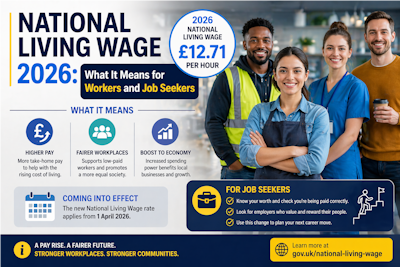
The National Living Wage rose to £12.71 per hour on 1 April 2026 — a 4.1% increase from the previous rate of £12.21. If you're on minimum wage or searching for entry-level work, that change has already hit your payslip. Here's what you need to know about the new rates, who they apply to, and what they mean in practice.
What Are the New Minimum Wage Rates from April 2026?
The government sets several minimum wage rates depending on your age and employment status. From 1 April 2026, all rates increased. The biggest percentage jump was for workers aged 18 to 20, who received an 8.5% rise.
| Category | Rate from April 2026 | Previous Rate | Increase |
|---|---|---|---|
| National Living Wage (aged 21+) | £12.71/hr | £12.21/hr | +4.1% |
| 18–20 year olds | £10.85/hr | £10.00/hr | +8.5% |
| 16–17 year olds and apprentices | £8.00/hr | £7.55/hr | +6.0% |
Source: GOV.UK — National Minimum Wage and National Living Wage rates
The apprentice rate of £8.00 applies if you're under 19, or if you're 19 or older and still in your first year of an apprenticeship. Once you complete your first year and are aged 19 or over, you're entitled to the full rate for your age group.
What Does £12.71 Per Hour Work Out to Annually?
Hourly rates don't always tell the full story. Here's what the National Living Wage looks like when converted to annual income, depending on how many hours you work each week.
| Hours Per Week | Annual Salary (£12.71/hr) | Previous Annual Salary (£12.21/hr) | Annual Increase |
|---|---|---|---|
| 35 hours | £23,129 | £22,203 | +£926 |
| 37.5 hours | £24,785 | £23,810 | +£975 |
| 40 hours | £26,437 | £25,397 | +£1,040 |
According to GOV.UK, around 2.7 million workers benefit directly from this year's increase. The Low Pay Commission confirmed the new rate is expected to stay ahead of inflation through to March 2027, meaning it represents a genuine increase in real terms — not just keeping pace with the cost of living.
Which Sectors Are Most Affected?
The National Living Wage has the biggest impact in sectors where low-paid roles are most concentrated. That means workers in the following industries are most likely to see their pay change directly as a result of the April 2026 uprating:
- Retail — shop floor staff, stock replenishers, checkout assistants
- Hospitality — kitchen assistants, front-of-house staff, bar workers, hotel housekeeping
- Social care — care assistants, support workers, residential care staff
- Cleaning and facilities — commercial cleaners, caretakers, security staff
- Logistics and warehousing — pickers, packers, delivery drivers on hourly contracts
According to the CIPD's Winter 2025/26 Labour Market Outlook, around 72% of employers say the increase in the National Living Wage will push up their employment costs. Employers in hospitality and social care in particular have flagged that higher wages could lead to price increases or reduced headcount. For workers, that's a mixed picture — better pay, but potentially tighter job availability in some areas.
The National Living Wage vs. the Real Living Wage — What's the Difference?
There are actually two different things called the "living wage" in the UK, and they're not the same thing.
The National Living Wage is the government's statutory minimum — the legal floor below which employers cannot pay workers aged 21 and over. From April 2026, that's £12.71/hr.
The Real Living Wage is set independently by the Living Wage Foundation and is based on the actual cost of living. For 2025–2026, those rates are:
- UK Real Living Wage: £13.45/hr
- London Living Wage: £14.80/hr
The Real Living Wage is voluntary — employers choose to pay it. Around 15,000 UK employers are accredited by the Living Wage Foundation, including many well-known retailers and financial services firms. If you're job hunting, look out for "Living Wage Employer" in job adverts — it's a sign the employer pays above the legal minimum.
The gap between the government rate and the London Living Wage is significant. A London-based worker on £12.71/hr would need an extra £4,076 a year to reach the London Living Wage rate of £14.80/hr.
What This Means If You're Job Hunting Right Now
If you're looking for work in 2026, the wage increase changes the landscape in a few practical ways.
First, entry-level roles in retail, hospitality and care now start at £12.71 — not negotiable downward, and many employers are advertising at or just above this to attract applicants in a competitive market. If you're seeing adverts that quote below that rate, they may be referring to apprenticeships or roles specifically for under-21s.
Second, the 18–20 rate has jumped significantly. If you're in that age bracket, the gap between your legal minimum and the adult rate has narrowed. At £10.85/hr, a 19-year-old working 37.5 hours a week earns around £21,158 a year — still below the adult NLW annual equivalent, but substantially more than a year ago.
Third, the rise in employer costs means some businesses — particularly smaller hospitality and retail operators — are being more selective about hiring. You may find fewer part-time or casual openings in certain sectors, while full-time permanent roles are more stable. In general, the job market in sectors like healthcare, logistics and construction remains strong regardless of the wage uprating.
How to Check You're Being Paid the Right Amount
Employers are legally required to pay the correct minimum wage from 1 April 2026. If you think you're being underpaid, you have options.
You can check your entitlement using the government's minimum wage calculator at GOV.UK. If your employer is underpaying you, you can report it to HMRC, who investigate complaints confidentially. Workers who are found to have been underpaid are entitled to backdated pay plus a financial penalty applied to the employer.
Common situations where workers are sometimes underpaid include having deductions made from wages that bring pay below the minimum (for uniforms or equipment, for example), not being paid for travel time between work locations, and employers misclassifying workers as self-employed when they're not.
If you're unsure about your employment status or whether you're entitled to the minimum wage, ACAS provides free and confidential advice online and by phone.
Will the National Living Wage Keep Rising?
The Low Pay Commission — the independent body that advises government on minimum wage rates — has been asked to recommend rates for 2027 later this year. The government's stated aim remains to keep the National Living Wage at two-thirds of median earnings. Whether that leads to another significant increase will depend on wage growth and inflation through the rest of 2026.
For now, the April 2026 uprating represents a real-terms increase for the lowest-paid workers in the UK. If you're job searching, it's worth knowing the floor — and looking for employers who pay above it.
Looking for minimum wage or above jobs near you? Browse our latest vacancies across retail, care, hospitality, logistics and more — with thousands of UK roles updated daily.